
Designing Solar Robots for Extreme Conditions
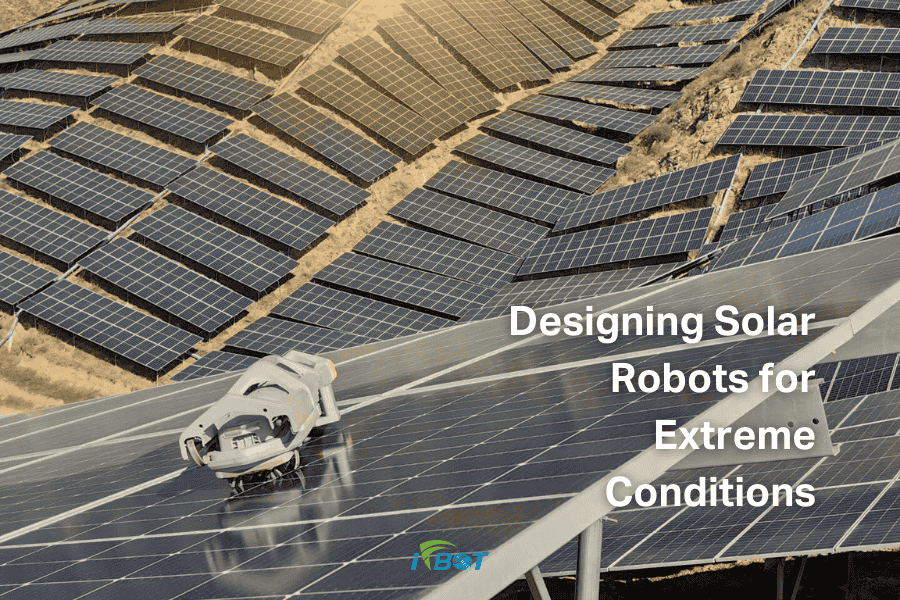
Designing for Extreme Conditions: How IFBOT Conquers Dust, Sand & High-Angle Rooftops
Solar panels don’t live in perfect conditions.
They face desert dust storms, coastal salt spray, industrial pollution, sudden rain, high winds, and steep rooftops that push equipment to its limits. And while solar technology keeps improving, one truth stays the same:
Dirty panels don’t produce power.
At IFBOT, we design portable and autonomous solar panel cleaning robots for the real world — not lab conditions. That means engineering for dust, sand, heat, wind, steep angles, and difficult access.
This article takes you inside how we design, test, and refine our robots to perform where traditional cleaning methods struggle.
Why Extreme Conditions Change Everything
Most cleaning challenges aren’t about whether to clean.
They’re about how.
Operators ask us questions like:
“Will the robot slip on a 40–50° roof?”
“Can it handle desert sand every single day?”
“What happens when dust mixes with moisture and turns sticky?”
“How do we clean safely when access is limited?”
“Will frequent cleaning damage the panels?”
These aren’t theoretical questions. They’re daily operational realities. And they’re exactly what we design for.
1. Conquering Dust & Sand in Harsh Environments
The Problem:
In deserts and dry regions, dust doesn’t settle once a month — it settles every day.
Even a thin layer can reduce output by 15–30% over time.
Manual cleaning becomes:
expensive
inconsistent
unsafe
impossible to scale
IFBOT’s Design Approach:
Dry-cleaning first, water second.
Our X3 robot is built specifically for high-dust environments:
Nano-fiber roller system
Lifts fine dust without scratching coatingsVacuum-assisted dust capture
Prevents re-settlingZero water required
Critical in water-scarce regionsLight pressure design
Protects fragile modules
Why this matters:
Water is not always available.
And in deserts, wet cleaning can actually create mud residue if done incorrectly.
That’s why we prioritize:
frequent dry cleaning
low surface pressure
consistent automation
Result:
✔ Stable energy output
✔ No water logistics
✔ Lower O&M cost
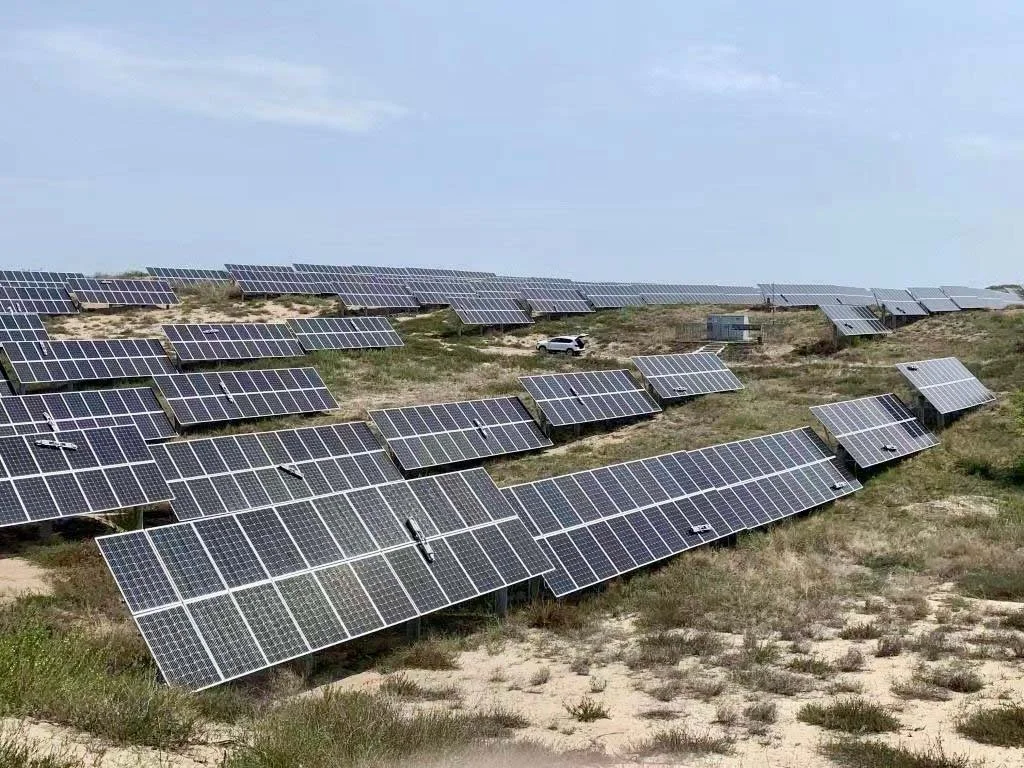
IFBOT X3_Inner Mongolia Hulunbuir Project
2. Handling Sticky Dirt, Salt & Industrial Residue
Not all dirt is dry.
Coastal areas, bird migration zones, and industrial sites face:
salt crystallization
oily pollution film
bird droppings
pollen buildup
Dry cleaning alone isn’t enough.
IFBOT’s Solution: Controlled Wet Cleaning
Our M20 robot is engineered for heavy contamination:
Dual-brush system
Rubber brush loosens residue
Bristle brush scrubs it away
Precision water spray
Softens dirt without flooding panelsWater recycling module
Reduces consumptionCruise control cleaning speed
Prevents streaks
This allows:
deep cleaning
controlled water use
protection of panel coatings

IFBOT M20 Solar Panel Cleaning Robot
3. Engineering for High-Angle Rooftops
Steep rooftops change everything.
Gravity increases risk.
Surface traction matters more.
Weight becomes critical.
The challenges:
slipping risk
uneven pressure
operator safety
carrying heavy equipment
IFBOT’s Design Strategy:
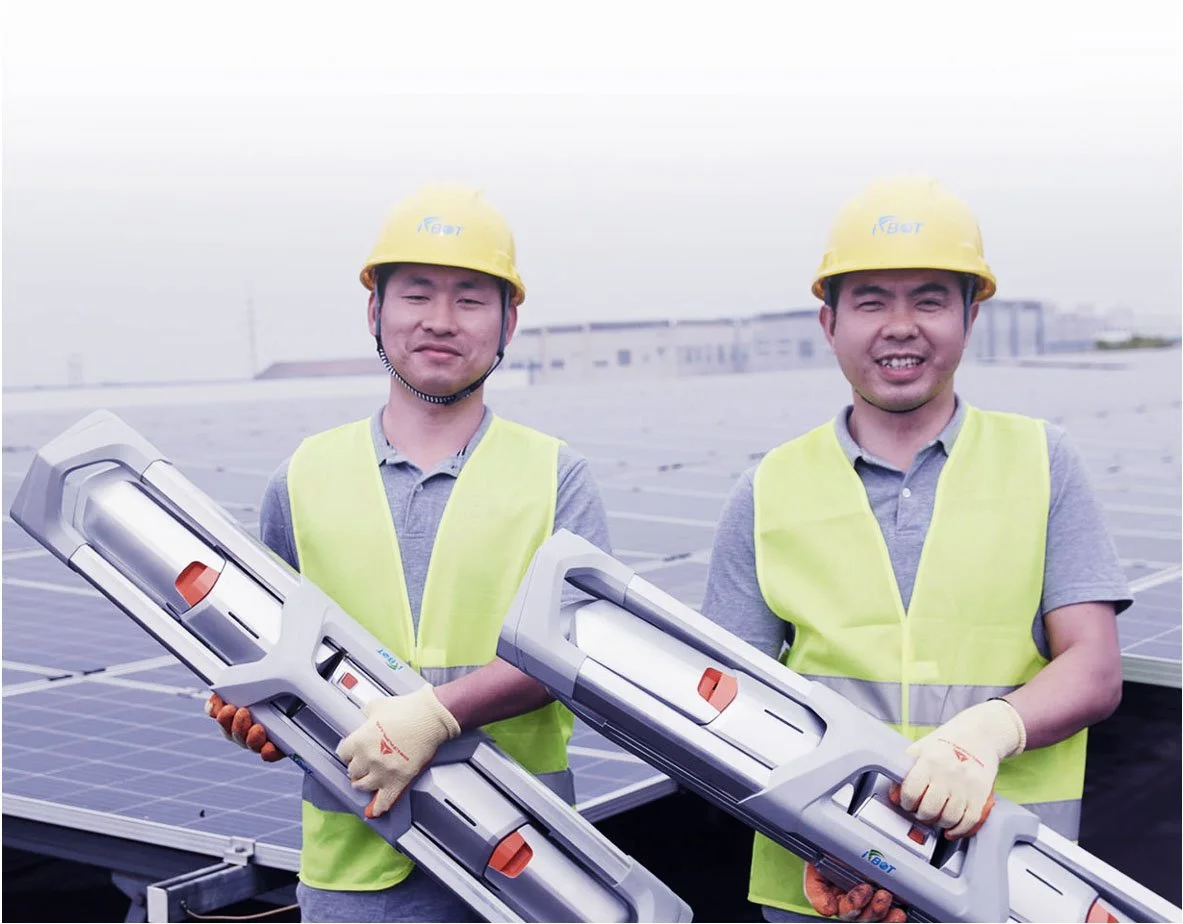
Ultra-Lightweight Construction
X3 weighs only 6.2 kg — up to 80% lighter than conventional robots.
This means:
less stress on panels
easier transport
safer deployment
better grip on slopes
Advanced Traction System
high-friction tracks
balanced weight distribution
slope stability up to 50°
Edge Detection Sensors
automatic stop near panel edges
fall protection
real-time correction
Why it matters:
Because no operator should be forced to walk dangerous rooftops just to clean panels.
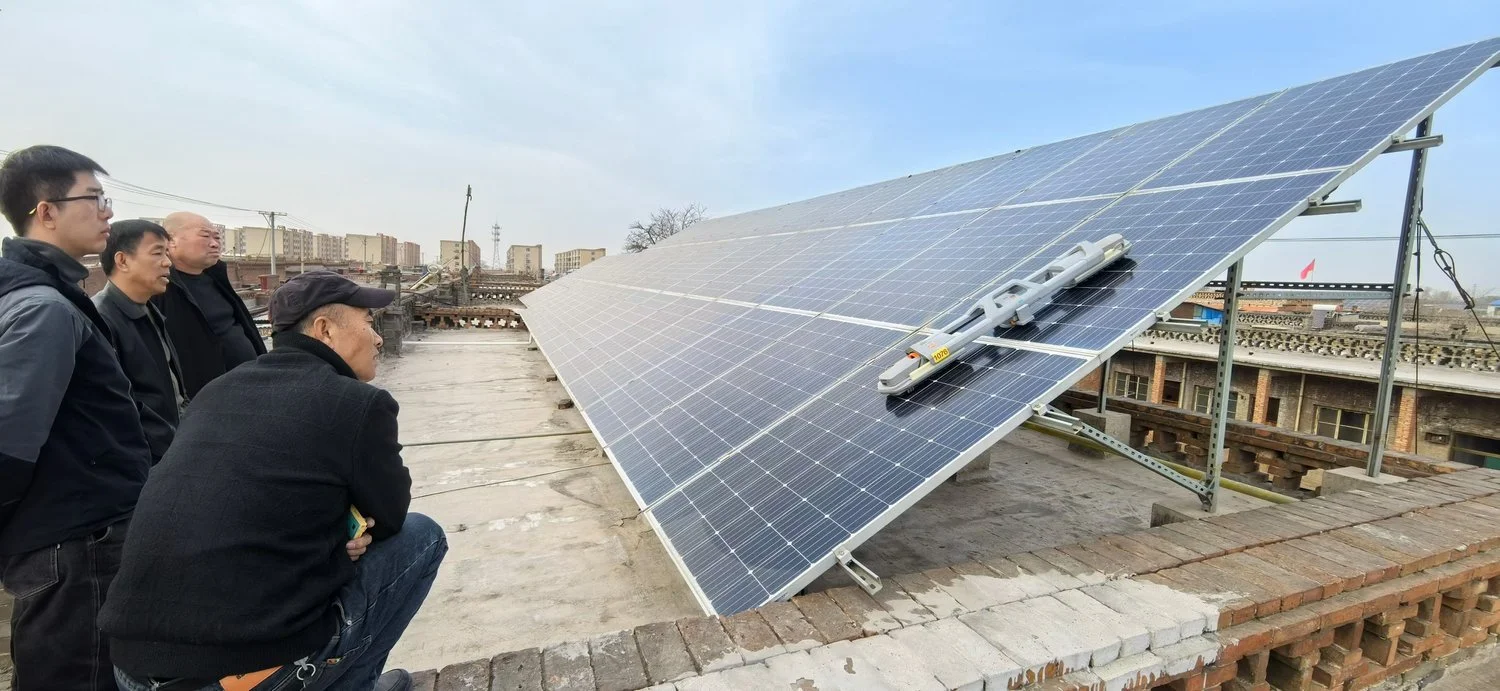
4. Portability: The Hidden Performance Factor
A robot can be powerful…
But if you can’t carry it easily, deployment becomes the bottleneck.
That’s why portability is core to our design philosophy:
backpack-style transport
quick setup
one-person operation
no heavy lifting
This is especially important for:
commercial rooftops
factories
parking structures
multi-building sites
Efficiency isn’t only about cleaning speed.
It’s about how fast you can start cleaning.

5. Stability in Wind, Heat & Uneven Layouts
Extreme conditions don’t come alone.
They combine:
wind gusts
thermal expansion
uneven rows
panel gaps
IFBOT systems include:
gyroscopic stabilization
adaptive speed control
real-time correction algorithms
anti-slip traction
These help robots:
stay on track
maintain consistent pressure
avoid drifting
finish each row precisely
6. Testing Beyond the Lab
We don’t stop at simulations.
Our robots are tested on:
desert farms
coastal rooftops
industrial facilities
agricultural solar fields
high-altitude installations
steep-angle arrays
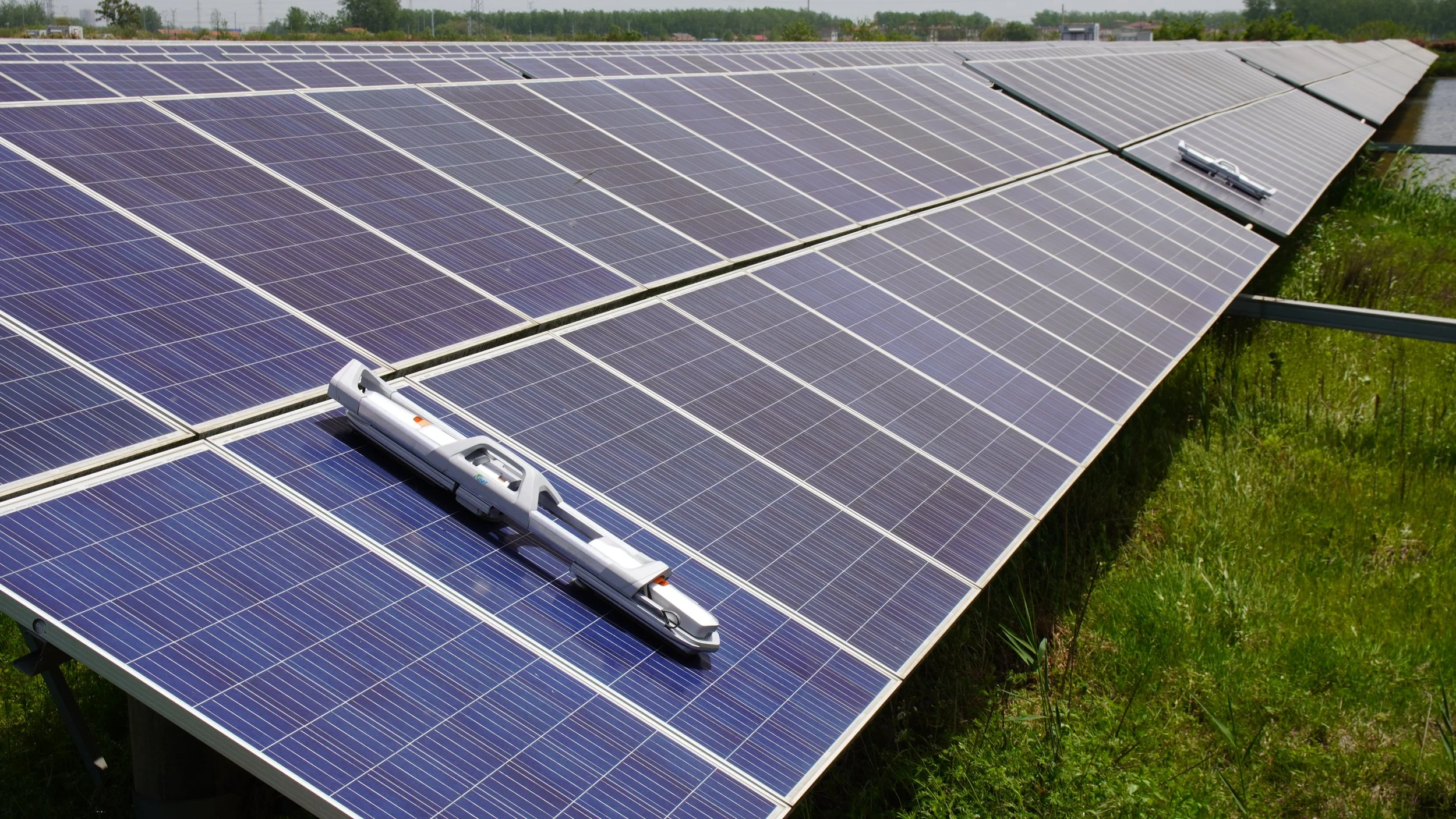
Gran estación fotovoltaica en tierra
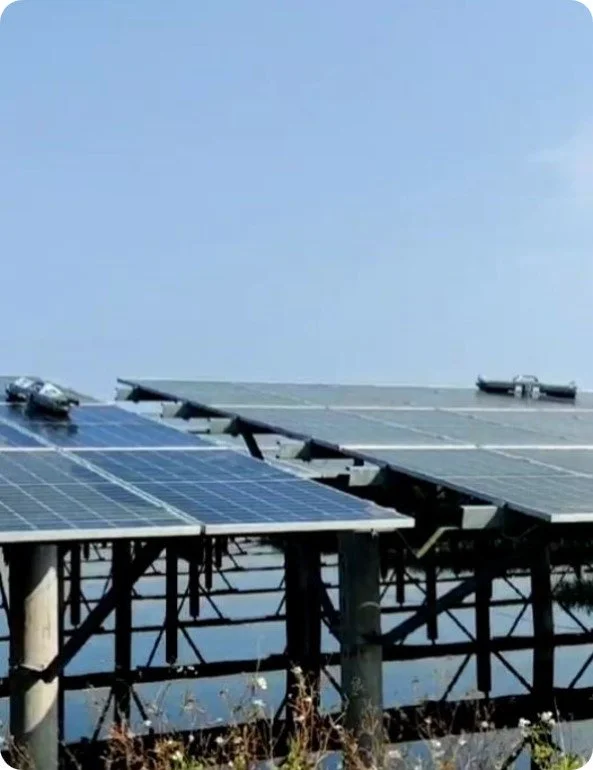
Estación fotovoltaica híbrida solar-pesquera

FV en tejados de cementeras
Because real-world testing reveals:
traction limits
brush wear patterns
battery performance
sensor reliability
And every test leads to:
design refinement
firmware updates
hardware improvements
7. What Operators Really Want to Know
“Will this damage my panels?”
No.
Our cleaning pressure is carefully calibrated to protect:
AR coatings
glass surface
mounting structure
“Can it run daily?”
Yes.
That’s exactly what dry robots are designed for.
“What if my site has mixed dirt?”
Many sites use:
X3 for daily dry cleaning
M20 for periodic deep cleaning
“What about remote locations?”
That’s where our UAV deployment system comes in:
drone-delivered robots
no walking across hot fields
fully automated deployment
8. Designing for the Future, Not Just Today
Extreme conditions will increase:
more desert solar
more rooftop installations
more coastal projects
higher performance expectations
That’s why IFBOT continues investing in:
AI navigation
smarter sensors
adaptive cleaning pressure
better battery systems
autonomous deployment
Final Takeaway
Designing for extreme conditions isn’t about building a stronger robot.
It’s about building a smarter one.
One that:
understands terrain
adapts to dirt types
protects fragile panels
keeps people off dangerous roofs
works day after day without complaint
That’s what we do at IFBOT.
Because solar deserves technology built for reality — not perfection.