
How Much Does a Solar Panel Cleaning Robot Cost in 2026?
In 2026, the price of a commercial solar panel cleaning robot can range from approximately USD 3,000 to more than USD 30,000 per unit. Permanently installed autonomous systems and multi-robot projects are generally priced through a site-specific quotation.
Public listings show basic commercial crawler robots at approximately USD 3,350 to USD 10,000, while professional remote-controlled solar cleaning robots are listed at around USD 24,950 to USD 31,600, before additional batteries, accessories, shipping, taxes or commissioning. These machines are not directly comparable, but the figures demonstrate how widely prices can vary.
The more useful question is therefore not simply:
How much does a solar panel cleaning robot cost?
It is:
How much will the complete cleaning solution cost for my solar site, and how quickly can it reduce my current operating expenses?
This guide explains the main price ranges, what affects the final quotation, how to calculate total cost of ownership and what information solar operators should prepare before requesting a price.
Note: All costs and financial examples in this article are stated in USD. Market prices are indicative only and are not IFBOT quotations.
Solar panel cleaning robot prices in 2026
The table below provides an initial budgeting guide for commercial and industrial buyers.
| Solar cleaning solution | Indicative 2026 price | Typical use |
|---|---|---|
| Basic portable or crawler robot | USD 3,000-10,000 | Smaller commercial arrays and basic cleaning tasks |
| Professional portable or remote-controlled robot | USD 25,000-32,000+ | Commercial rooftops, industrial sites and larger solar installations |
| Permanently installed autonomous system | Site-specific quotation | Large, uniform utility-scale solar farms |
| Multi-robot fleet | Site-specific quotation | Large sites requiring simultaneous cleaning |
| UAV-assisted cleaning system | Site-specific quotation | Fragmented, remote or difficult-to-access arrays |
These ranges include machines with very different levels of automation, cleaning capacity, safety technology, product weight, brush design, warranty and technical support. A low-cost unit may require more manual control, more operators or more time moving between rows. A higher-priced system may provide greater productivity, stronger edge protection, autonomous navigation or more complete after-sales support.
For this reason, buyers should compare the cost per cleaning cycle, cost per square metre and total cost of ownership, rather than choosing a machine based only on its purchase price.
Why is there no single price for a solar panel cleaning robot?
Solar arrays differ significantly. A robot that works well on a flat factory rooftop may not be suitable for a steep installation, an uneven panel layout or a large utility-scale solar farm.
The final cost depends on the robot itself, the site where it will operate and the complete package required to keep it working reliably.
1. The type of solar panel cleaning robot
The system architecture has a major influence on price.
Portable robots
Portable robots are carried or transported to the panel array when cleaning is required. They normally avoid the need to install permanent rails or docking infrastructure.
They can be particularly practical for:
Existing solar installations
Commercial and industrial rooftops
Several separate arrays at one site
O&M companies serving multiple customers
Sites where permanent infrastructure is undesirable
Their total cost may include the robot, batteries, charger, brushes, remote control, transport equipment and any water-supply accessories.
Remote-controlled robots
Remote-controlled machines are operated by a person from the ground or beside the array. They may offer wide brushes and high cleaning capacity, but some are heavier and may require lifting, transport or row-transfer equipment.
The robot price may therefore represent only part of the complete investment.
Permanently installed robots
Rail-mounted or fixed autonomous robots are usually designed as part of the solar installation. They may include:
Rails or guide systems
Charging or docking stations
Control systems
Communications infrastructure
Installation and commissioning
Site-specific engineering
Fleet-management software
These systems can reduce routine operator involvement, but their infrastructure requirements mean that pricing is normally calculated at project level rather than as a simple price per robot.
UAV-assisted systems
A UAV-assisted system can deploy and retrieve robots across arrays where ground access, row transfers or manual handling are difficult.
The cost depends on the size and configuration of the site, the number of cleaning robots, required flight coverage, docking equipment and integration requirements.
The IFBOT UAV Intelligent PV Cleaning System combines aerial navigation with robot deployment and retrieval for solar environments where conventional movement between arrays is challenging. The system is a site-specific solution rather than a standard off-the-shelf package.
2. Solar array size and required cleaning time
The larger the installation, the more important productivity and fleet planning become.
A site that must complete cleaning within one day may require several robots working at the same time. Another site may be able to use one machine over several days.
The supplier will normally need to know:
Total cleanable panel area
Installed PV capacity
Number and length of panel rows
Required cleaning frequency
Maximum time available per cycle
Number of daily operating hours
Whether the robot will be used at one site or several sites
A larger order may qualify for quantity pricing. For IFBOT X3 there is no minimum order quantity and the quantity discounts are available from five units.
3. Panel layout and tilt
A robot must be compatible with the physical configuration of the solar array.
Before confirming a suitable model and price, the supplier may need to review:
Panel tilt
Module dimensions
Frame height
Gaps between panels
Uneven transitions
Row orientation
Walkways
Roof obstacles
Exposed panel edges
Separate or fragmented arrays
Roof access
Load restrictions
An inexpensive robot becomes a poor investment when it cannot cross the required panel layout, clean close to the edges or operate safely at the site’s tilt angle.
Solar operators should therefore provide drawings, photographs or videos when requesting a quotation. IFBOT’s solar panel cleaning use cases provide examples of the installation types and environments that should be considered when selecting a robot.
4. Wet cleaning versus dry cleaning
The cleaning method affects both the purchase price and ongoing operating cost.
Dry cleaning
Dry-cleaning robots use brushes, rollers, suction or a combination of these methods to remove loose dust and particles without water.
They may be suitable for:
Dusty environments
Water-scarce regions
Frequent routine cleaning
Sites where water access is difficult
Installations where water residue is a concern
Operating costs may include electricity, batteries, brushes, suction cups and routine maintenance, but no water-supply system is required.
Wet cleaning
Wet-cleaning robots combine water with brushes or other mechanical cleaning elements. They may be more suitable for:
Bird droppings
Mud
Salt deposits
Industrial residue
Sticky contamination
Dirt that cannot be removed effectively through dry cleaning alone
The total project cost may also need to include:
Water pumps
Hoses or inlet pipes
Pipe trolleys
Water storage
Filtration
Water treatment
Operator time for water management
The right option depends on the site’s contamination, climate, water availability and cleaning frequency. The IFBOT guide to dry versus wet solar panel cleaning robots explains the operational differences between the two methods in more detail.
5. Cleaning capacity and the number of robots required
A robot’s published productivity is useful for comparison, but it does not automatically equal its real daily cleaning capacity.
Effective output can be affected by:
Placement and retrieval time
Moving between panel rows
Separate rooftop sections
Battery changes
Water connections
Obstacles
Panel gaps
Dirt severity
Weather conditions
Operator experience
Site safety procedures
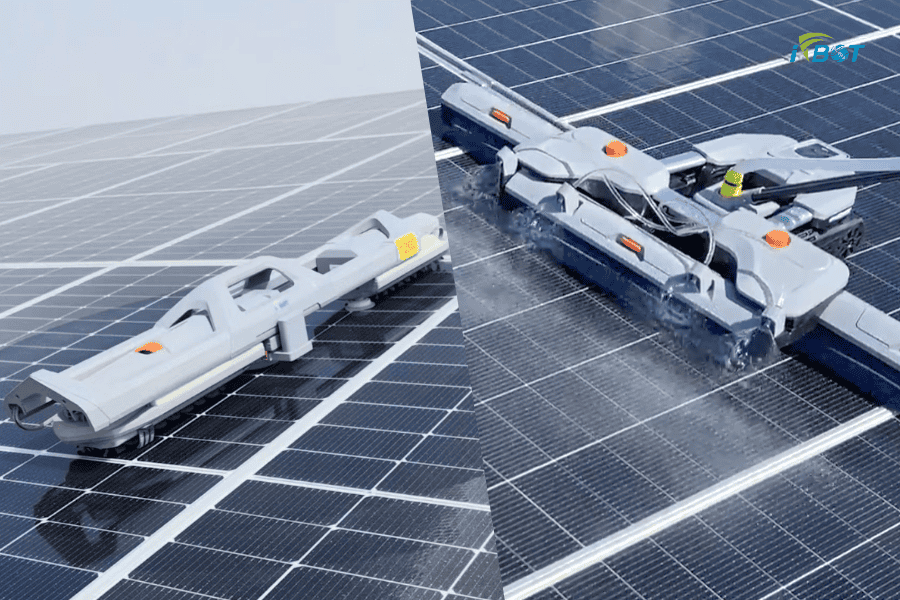
The IFBOT M20 water-powered cleaning robot has a productivity of up to 1,000 m² per hour, a four-hour battery runtime and a 1,300 mm dual-action brush. Its standard package includes the robot, two batteries, one charger and one remote control, while water-supply equipment and additional battery pairs are available as optional accessories.
The IFBOT X3 dry-cleaning robot has a productivity of 30 m² per hour and a four-hour battery runtime. Its standard package includes two batteries, a charging stand, brushes, suction cups and a storage bag.
These two machines serve different applications, so their hourly capacities should not be compared without considering cleaning method, panel layout, autonomy and site requirements.
6. Batteries, brushes and accessories
The base robot price may not include everything required for the buyer’s desired working schedule.
Before comparing quotations, ask what is included in the standard package and what must be purchased separately.
Common additional items include:
Extra battery pairs
Additional chargers
Replacement brushes
Suction cups
Remote controls
Water pumps
Hoses
Pipe trolleys
Safety equipment
Storage cases
Row-transfer equipment
Spare-parts packages
Extra batteries may be valuable when the robot must operate for longer than one battery cycle each day. Replacement brushes and other consumable parts should also be included in the long-term budget.
For the X3, IFBOT recommends replacing roller brushes and suction cups approximately once per year for optimal performance, depending on use and site conditions.
7. Safety technology
Safety functions can increase the initial cost of a robot, but they can also reduce the risk of falls, equipment damage and interrupted cleaning.
Relevant features may include:
Panel-edge detection
Automatic stopping
Anti-fall systems
Warning lights
Audible alerts
Suction or traction systems
Automatic posture adjustment
Low-battery return
Night-time operating support
The M20 includes triple-layer fall protection, real-time hazard detection, automatic stopping and warnings. Its sensors also detect changes in the panel frame and adjust the robot’s posture to support edge-to-edge cleaning.
The X3 uses embedded sensors to detect PV module edges and plan its cleaning path autonomously. It also supports low-battery return and night-time cleaning.
A quotation should clearly identify which safety functions are included and whether the operator must use additional equipment.
8. Shipping, taxes and local support
Solar panel cleaning robots are industrial products. The final delivered cost can differ significantly by country.
The quotation may be affected by:
Destination
Freight method
Import duties
Local taxes
Insurance
Customs clearance
Distributor services
On-site training
Commissioning
Asistencia técnica
IFBOT does not publish one universal global selling price because shipping, taxes, order quantities and discounts differ between projects and countries. Customers are asked to provide the required product, quantity and delivery address before receiving a detailed quotation.
Buyers should confirm whether the quoted amount represents:
Ex-factory price
Freight-inclusive price
Delivered price before tax
Fully landed cost
Complete commissioned project cost
Without this clarification, two quotations may appear very different even when the final delivered costs are similar.
Purchase price versus total cost of ownership
The initial purchase price is only one part of the financial decision.
The total cost of ownership, or TCO, includes every cost required to buy, operate and maintain the cleaning system over its useful life.
Initial investment
The initial investment may include:
Robot purchase
Batteries
Chargers
Brushes
Suction components
Water-supply equipment
Transport equipment
Spare parts
Shipping
Customs and taxes
Training
Commissioning
Site modifications
Recurring operating expenses
Annual or recurring expenses may include:
Operator labour
Water
Electricity
Brush replacement
Battery replacement
Preventive maintenance
Repairs
Asistencia técnica
Storage
Transport between sites
Costs the robot may help reduce
Depending on the existing cleaning method, automation may reduce:
Manual cleaning hours
Contractor fees
The number of workers required
Equipment rental
Crew transportation
Water use
Time spent working at height
Cleaning delays
Inconsistent cleaning outcomes
A higher-priced robot may therefore produce a lower total cleaning cost when it can clean more efficiently, reduce labour requirements or operate across several sites.
The article Are Automatic Solar Panel Cleaners Worth It? examines these operational trade-offs in greater detail.
How to calculate the cost for your solar site
The following process provides an initial estimate before requesting a formal quotation.
Step 1: Calculate your current annual cleaning cost
Use:
Current annual cleaning cost = cost per cleaning cycle × cleaning cycles per year
Include:
Internal labour
Cleaning contractors
Water
Equipment rental
Transportation
Supervision
Roof-access equipment
Safety management
For example, when a company spends USD 2,500 per cleaning cycle and cleans the installation six times per year:
USD 2,500 × 6 = USD 15,000 per year
Step 2: Estimate the required robot operating time
Use:
Cleaning time per cycle = total cleanable area ÷ effective robot productivity
Use realistic effective productivity rather than automatically using the maximum figure stated in a brochure.
For example, consider a 20,000 m² solar array and an estimated effective cleaning capacity of 700 m² per hour:
20,000 m² ÷ 700 m² per hour = approximately 28.6 operating hours per cycle
The site can then decide whether one robot can complete the work within the required timeframe or whether several units should operate simultaneously.
Step 3: Estimate annual robotic cleaning costs
Calculate the required operating hours and include:
Operator labour
Water
Charging electricity
Replacement brushes
Maintenance
Repairs
Row transfers
Transport between sites
For example:
| Robotic cleaning expense | Illustrative annual cost |
|---|---|
| Operator labour | USD 1,800 |
| Water and electricity | USD 500 |
| Brushes and consumables | USD 700 |
| Maintenance allowance | USD 1,000 |
| Estimated annual robotic cleaning cost | USD 4,000 |
These are illustrative figures only. Actual operating expenses will vary by site and region.
Step 4: Calculate annual operating savings
Use:
Annual savings = current annual cleaning cost − annual robotic cleaning cost
Using the example above:
USD 15,000 − USD 4,000 = USD 11,000 in estimated annual savings
Avoid adding assumed energy-production gains unless they are supported by the site’s own soiling data, performance records and electricity value.
The robot creates financial value by allowing the operator to clean more consistently, more safely or at a lower cost. The value of recovered production must be calculated from measurable site conditions rather than a generic percentage.
Step 5: Estimate simple payback
Use:
Simple payback period = complete project investment ÷ annual savings
For an illustrative total project investment of USD 25,000 and annual savings of USD 11,000:
USD 25,000 ÷ USD 11,000 = approximately 2.3 years
This calculation does not represent an IFBOT quotation or guaranteed result. It simply demonstrates how a solar operator can compare the investment with current cleaning expenses.
Solar panel cleaning robot cost worksheet
Prepare the following information before contacting a supplier:
| Information required | Your site |
|---|---|
| Site country and delivery location | |
| Installed PV capacity | |
| Approximate cleanable area | |
| Panel dimensions | |
| Panel tilt range | |
| Number of panel rows | |
| Average row length | |
| Gaps between panels | |
| Obstacles or uneven transitions | |
| Current cleaning method | |
| Cleaning cycles per year | |
| Current cost per cleaning cycle | |
| Current cost per operators | |
| Main type of contamination | |
| Water availability | |
| Preferred wet or dry cleaning | |
| Required completion time | |
| Number of sites where the robot will be used |
Providing these details makes it easier for the manufacturer to assess compatibility, estimate the required number of robots and prepare an accurate delivered price.
Should you purchase the cheapest solar panel cleaning robot?
Not necessarily.
A low purchase price can be attractive, but it may exclude important elements such as:
Batteries
Replacement brushes
Local support
Training
Warranty
Spare parts
Safety systems
Technical documentation
Shipping
Commissioning
Before purchasing, ask the supplier:
Has the robot operated on solar installations similar to mine?
Is it compatible with my panel tilt and layout?
How many operators are required?
What is the realistic daily cleaning capacity?
How does the robot respond to panel edges and gaps?
What accessories are included?
Which parts are considered consumables?
How quickly can replacement parts be delivered?
What training is provided?
What is covered by the warranty?
Is technical support available in my region?
What will the complete delivered cost be?
The most economical robot is not always the one with the lowest invoice price. It is the one that can complete the required cleaning reliably, safely and repeatedly at an acceptable cost over several years.
How IFBOT solar panel cleaning robot pricing works
IFBOT prepares each quotation according to the selected product, quantity, delivery location and project requirements.
IFBOT M20
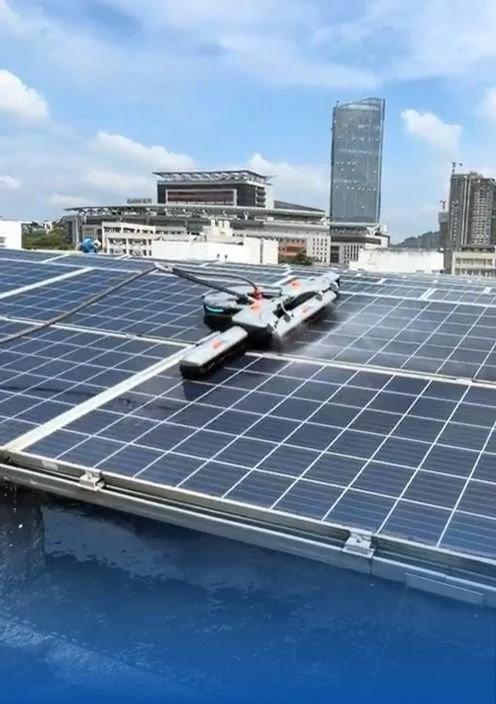
The IFBOT M20 is a lightweight water-powered robot designed for fast and consistent wet cleaning. It weighs 12.7 kg and can be carried, positioned and started by one operator.
Its specifications include:
Water-washing dual-brush system
1,300 mm dual-action brush
Productivity of up to 1,000 m² per hour
Four-hour battery runtime
Applicable tilt range of 0°–15° for wet cleaning
Triple-layer fall protection
Cruise-control mode
Self-cleaning brushes
The standard package includes one M20 robot, two batteries, one charger and one remote control. Optional water-supply accessories and additional batteries can be added according to the site’s operating requirements.
IFBOT X3
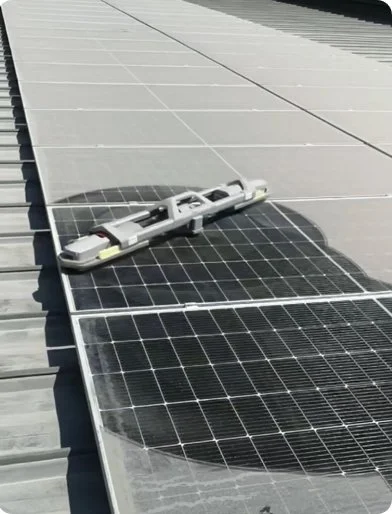
The IFBOT X3 is a lightweight, autonomous dry-cleaning robot using nano roller brushes and vacuum cleaning.
Its specification includes:
Weight of 6.2 kg
Vacuum and dry-cleaning method
Productivity of 30 m² per hour
Four-hour battery runtime
Applicable tilt range of 15°–40°
Autonomous edge detection
Pilas sustituibles
Night-time cleaning
Low-battery return
The standard package includes the robot, suction cups, nano roller brushes, two batteries, a charging stand and a storage bag.
IFBOT UAV Intelligent PV Cleaning System
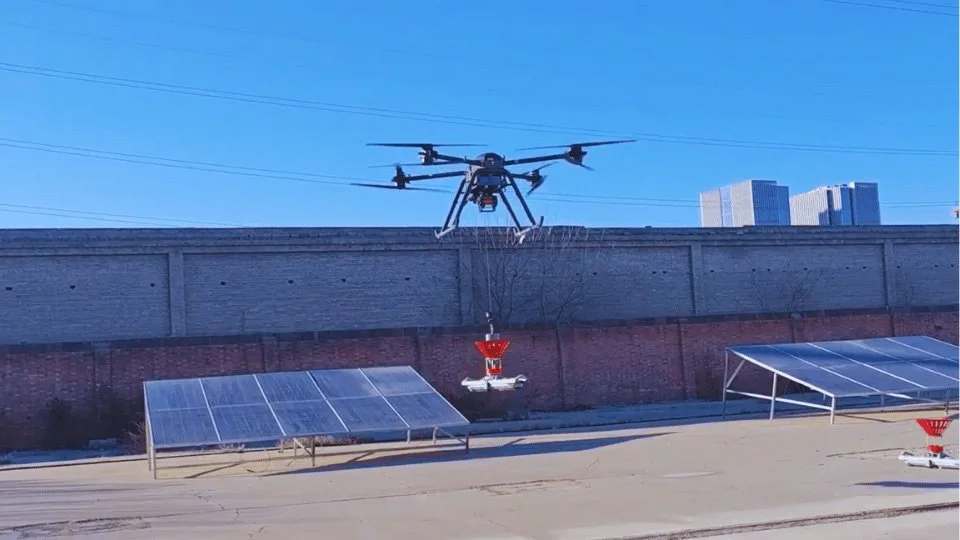
The IFBOT UAV Intelligent PV Cleaning System is intended for solar environments where moving robots manually between panel arrays is difficult. It combines UAV navigation with the deployment and retrieval of cleaning robots and is evaluated according to the specific project layout.
Frequently asked questions about solar panel cleaning robot costs
How much does a solar panel cleaning robot cost?
Publicly listed commercial robots range from approximately USD 3,000 to more than USD 30,000 per unit. Advanced autonomous, rail-mounted and UAV-assisted systems normally require a customised project quotation.
Why do many manufacturers not publish a fixed price?
The final amount can depend on the robot model, quantity, batteries, accessories, delivery destination, taxes, shipping and technical support. Site compatibility may also need to be assessed before the correct product and quantity can be confirmed.
How many solar panel cleaning robots will I need?
The number depends on:
Total panel area
Required completion time
Effective cleaning capacity
Daily operating hours
Battery runtime
Time needed to move between arrays
Cleaning frequency
A supplier should review the layout before recommending a fleet size.
Are batteries and brushes included?
This varies by manufacturer and product. Request an itemised quotation showing the robot, batteries, chargers, brushes, spare parts, safety equipment, water accessories, freight and taxes.
IFBOT lists the standard package and optional accessories directly on its M20 and X3 product pages.
Is a fixed autonomous system cheaper than a portable robot?
Not automatically.
A fixed system may reduce routine operator involvement, but it can require rails, docking equipment, installation and project engineering. A portable robot may require more handling but can be used across separate arrays or multiple sites without permanent infrastructure.
The more economical choice depends on the scale, uniformity and cleaning frequency of the solar installation.
How long does it take for a solar cleaning robot to pay for itself?
Payback depends on the complete project price, current cleaning cost, cleaning frequency, labour savings, consumables and equipment utilisation.
A robot used frequently across several sites may produce a faster payback than one used only a few times per year. Buyers should calculate payback using their own operating expenses rather than relying on a generic promise.
Does IFBOT have a minimum order quantity?
No minimum order quantity is required for the X3.
What information does IFBOT need to prepare a quotation?
At minimum, provide:
Product of interest
Required quantity
Delivery address
Site location
Panel area
Panel layout
Tilt angle
Main cleaning challenge
Additional photographs, drawings or videos will help the team assess suitability more accurately.
Get an accurate price for your solar installation
There is no universal solar panel cleaning robot price that applies to every project.
The right solution depends on the installation size, panel layout, tilt, dirt type, water availability, cleaning frequency, required productivity, delivery location and support requirements.
Rather than comparing robot prices alone, calculate the complete delivered investment, expected annual operating cost and realistic payback for your site.
Request an IFBOT quotation and share your location, cleanable panel area, layout and current cleaning method. The IFBOT team will assess your requirements and recommend the most suitable cleaning solution for your solar site.